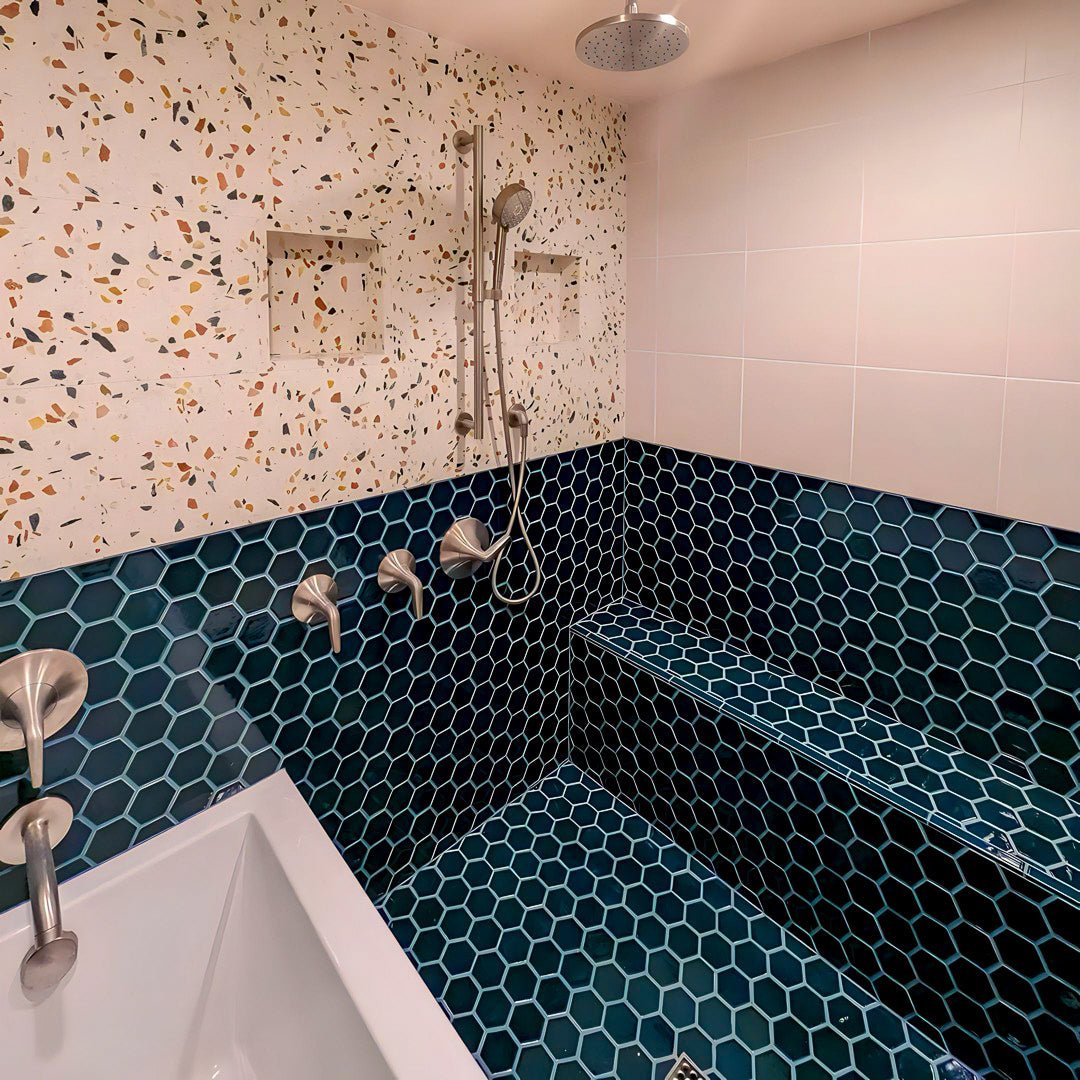
Terrazzo tile is often admired for its bold patterns and timeless appeal—but it also comes with a reputation for being expensive. Homeowners and designers frequently ask whether terrazzo is truly worth the price compared to more common materials like porcelain, ceramic, or marble.
The short answer: it depends on how you measure value. In this article, we break down terrazzo’s cost, what drives its pricing, and when it makes sense as a long-term investment.

How Much Does Terrazzo Tile Cost?
Terrazzo tile prices typically range from mid to high-end, depending on several factors. Material costs can vary based on the type of aggregate used (marble, glass, or custom blends), tile size, thickness, and finish.
Unlike factory-produced tiles, terrazzo often involves a more detailed production process. That alone explains why prices fluctuate more than standard ceramic or porcelain options. Custom colors or aggregate mixes will also increase cost, but they allow for a level of design flexibility few materials can match.
Why Is Terrazzo More Expensive Than Other Tiles?
One of the main reasons terrazzo costs more upfront is how it’s made. Terrazzo uses natural aggregates set in cement or epoxy, often requiring skilled craftsmanship rather than mass automation.
Beyond production, terrazzo’s value lies in:
- Exceptional durability
- Long lifespan
- Repairability instead of full replacement
- Sustainable materials, often incorporating recycled content
When compared to lower-cost tiles that may need replacement every 10–15 years, terrazzo’s price starts to make more sense.

Terrazzo vs Marble, Porcelain, and Ceramic
At first glance, porcelain and ceramic tiles appear far more affordable. However, they are typically designed for efficiency and consistency, not longevity.
Marble offers a similar luxury feel but requires more maintenance and is prone to etching and staining. Terrazzo, on the other hand, combines durability with design flexibility and generally demands less long-term upkeep.
When comparing cost alone, terrazzo may not win. When comparing lifecycle value, it often does.
Installation Costs: What to Expect
Installation is another factor that influences terrazzo’s total cost. Proper subfloor preparation and experienced installers are essential. While installation may cost more than standard tile, it also ensures performance over decades rather than years.
Cutting corners during installation is one of the few ways terrazzo can fail—so it’s not the place to compromise.

Does Terrazzo Save Money Over Time?
In many cases, yes. Terrazzo’s durability means fewer repairs, less frequent replacement, and lower maintenance costs over time. With proper care, terrazzo floors can last 20–40 years or more, making the upfront investment easier to justify.
This is why terrazzo is often chosen for high-traffic residential areas and commercial spaces where longevity matters.
When Terrazzo Is Worth the Price — and When It’s Not
Terrazzo is worth the price if:
- You’re planning a long-term renovation
- Durability and design matter equally
- You want a surface that ages gracefully
It may not be the best choice if:
- The project is short-term
- Budget is the primary constraint
- Installation expertise isn’t available
An honest evaluation upfront leads to better decisions—and better results.

Conclusion
Terrazzo tile isn’t the cheapest option, but it isn’t meant to be. Its value comes from durability, timeless design, and long-term performance. For homeowners and designers who see surfaces as an investment rather than a quick fix, terrazzo often proves its worth over time.
If you’re considering terrazzo for your next project, exploring material quality and installation options is just as important as comparing prices.
Explore Our Terrazzo Tile Collection
Discover curated terrazzo tiles designed for both residential and commercial spaces:
👉 https://cementocollection.com/collections/terrazzo-tiles