

Last updated: July 16, 2026

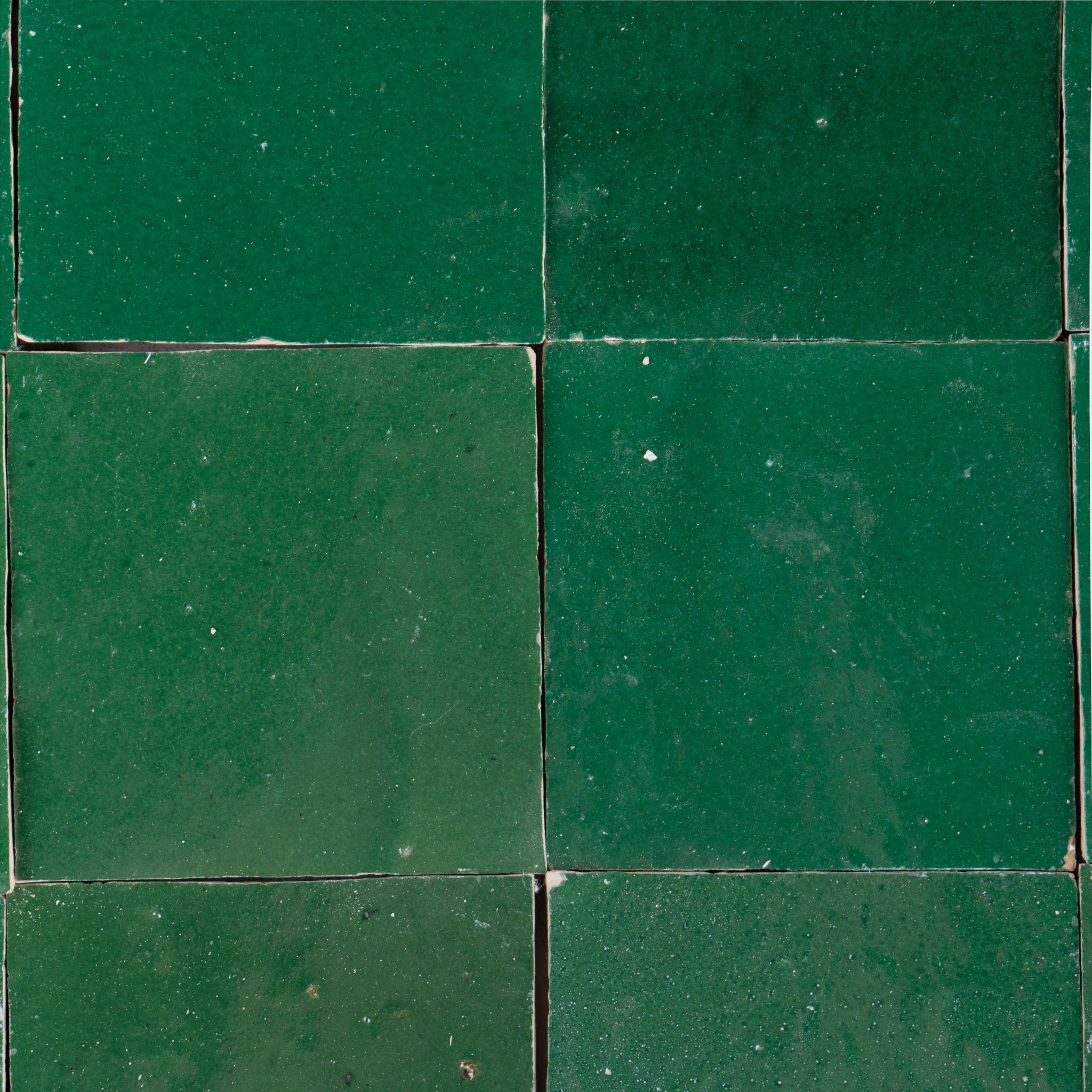
Zellige is handmade Moroccan terracotta tile, hand-cut and finished with a hand-applied glaze in the centuries-old Fez tradition — not ceramic. Cemento Collection imports it directly in 60+ colorways and 2x6 and 4x4 formats. Its irregular edges and tonal variation are defining features of authentic zellige, so plan 10-15% overage. Request a sample before you order.
Key Takeaways
- Zellige is glazed Moroccan terracotta, not ceramic — a clay body fired and hand-finished in Fez.
- Every tile is hand-shaped, hand-cut, and hand-dipped in glaze, so no two pieces match exactly.
- Irregular edges, tonal shifts, and small pits are marks of authenticity, not defects.
- Zellige needs sealing, and it belongs on walls, backsplashes, and sealed wet areas.
- Cemento Collection stocks zellige in 2x6 bejmat and 4x4 formats across 60+ colorways, with samples available.
You have seen it on a restaurant wall that made you stop mid-sentence, or in a bathroom where the light seemed to move across the tile. That surface is almost always zellige. It reads as luxury, yet the material itself is humble: clay, water, glaze, fire, and a great deal of skilled hand-work. Knowing what zellige actually is — and what it is not — changes how you specify it, budget for it, and live with it.
What is zellige tile?
Picture the backsplash you are choosing between: one flat and uniform, one that catches light unevenly and shifts in tone across the wall. If the second one is pulling at you, you are drawn to zellige. It is a handmade Moroccan wall tile made from natural terracotta clay, hand-cut into small pieces and finished with a hand-applied glaze.
The word itself comes from the Arabic zellij, tied to a verb meaning "to slide" — a nod to the tile's smooth, glassy glaze. Artisans in and around Fez have made it by hand for centuries, and that tradition still defines authentic zellige today.
One correction matters before any other. Zellige is terracotta, not ceramic. It shares the glossy face of a glazed ceramic tile, but underneath sits a hand-formed clay body with its own thickness, weight, and behavior. That distinction drives how zellige looks, where it belongs, and how you care for it — everything below builds on it.
At Cemento Collection we import zellige directly and stock it in 2x6 bejmat and 4x4 formats across more than 60 colorways, from soft neutrals to the deep greens designers reach for most.
What are zellige tiles made of?

Everything people love and misjudge about zellige traces back to one fact: it is made from raw, unrefined clay. That clay, dug near Fez, is mixed with water, pressed into simple molds, and left to dry in the sun before anything else happens.
From there the work stays entirely in human hands. Each tile is cut and shaped by hand, dried again, then hand-dipped in a mineral glaze and stacked into a kiln fired overnight. The heat moves unevenly through that kiln, and that unevenness is the point — it gives each tile its depth and its slight shifts in color.
Because the clay is natural and unfiltered, it carries lime deposits that can leave small pits in the finished face. You may also see faint crazing, a fine web in the glaze. These are not flaws in the run; they are the fingerprint of a terracotta tile made without machines. A ceramic tile pressed from refined, uniform powder cannot produce them, which is exactly why zellige looks the way it does.
What to know before you buy zellige

Most disappointment with zellige comes from expecting it to behave like a machine-made tile. Set that expectation aside and the material rewards you; hold onto it and every natural trait reads as a problem. Here is what to plan for.
Expect variation. Color shifts from tile to tile and even across a single piece, and thickness and size vary slightly because each tile is hand-formed. On our product pages we publish a variation key for each glaze so you can see how much movement to expect before you commit.
Expect texture. Edges are uneven, and you will find occasional pits, light crazing, and small chips. Laid across a wall, those irregularities are what create zellige's shimmer — the reason a flat, uniform tile never quite matches the look.
Two practical rules follow from this. Order 10-15% overage so you have enough tile to lay out the field you want and cover cuts and breakage. And plan to seal zellige, since terracotta is porous and a sealer protects both the clay and the grout. Treat these as the cost of a handmade material, not as fine print.
Zellige vs ceramic tile: the difference that matters
"Is ceramic better than zellige?" is the wrong question, because they are not the same product doing the same job. A standard ceramic tile is pressed from refined powder into a dense, uniform body and machine-glazed for a flat, repeatable face. Zellige is hand-formed terracotta with a hand-dipped glaze, built for character rather than uniformity.
That difference shows up where it counts: performance. Terracotta is more porous than a dense ceramic or porcelain body, so zellige needs sealing and is specified for walls, backsplashes, and sealed wet areas rather than heavy-traffic floors. The two look similar in a photo and behave differently on the wall — which is why the terracotta-versus-ceramic distinction is worth getting right before you buy.
If you want the movement, depth, and hand-made surface, zellige is the answer and ceramic will always look flatter. If you need a uniform, budget floor tile for a high-traffic space, a ceramic or porcelain is the more practical pick. Choose by the job, not by a ranking.
Sizes, uses, and cost


Start with where the tile is going, and the rest of the decision gets easier. The hand-cut zellige square is a wall material first: backsplashes, feature walls, shower surrounds, and powder rooms, all sealed. For a high-traffic floor, a denser tile — or the sturdier bejmat covered below — serves better.
Format follows the space. The 2x6 bejmat is a thicker, molded brick with a more regular shape — traditionally the more floor-tolerant of the two — while the hand-cut 4x4 square stays wall-first with a calmer, grid-forward field. Cemento Collection stocks both, and the same glaze reads differently between them, another reason to see it in hand.
On cost, "cheapest zellige tile" is worth reframing. Zellige is handmade and hand-glazed, so it sits above mass-produced ceramic on price, and a bargain-priced "zellige" is often a printed ceramic imitation without the terracotta body or the glaze depth. The honest way to control cost is to confirm the real material and the exact glaze first. Browse the full range in the zellige collection, and if the greens are pulling at you — emerald, forest, moss, and aquamarine are the colorways designers return to. Request a sample before you order.
For installation, zellige sets like other wall tile with two adjustments. Use an unsanded grout to protect the glaze, and let the installer work with the irregular edges instead of forcing a machine-straight grid. For a warranty-backed result, a professional installer is the safer route.
Frequently Asked Questions
How do you pronounce zellige?
Zellige is pronounced zeh-LEEZH - two syllables, with a soft g like the s in measure and the stress on the second syllable. You will also see it spelled zellij, zelige, or zillij; these refer to the same handmade Moroccan terracotta tile. The spelling varies because the word is transliterated from Arabic.
Is ceramic tile better than zellige tile?
Neither is better; they answer different needs. Dense ceramic and porcelain absorb little water and rate well for high-traffic floors. Zellige is hand-formed terracotta - more porous, so it is sealed and specified for walls and backsplashes, where its depth and movement are exactly the point.
What is the cheapest zellige tile?
Genuine zellige is handmade and hand-glazed, so it costs more than mass-produced ceramic, and very cheap zellige is often a printed ceramic lookalike. Instead of chasing the lowest price, request a sample before you order - for the cost of one tile you confirm the real terracotta body and exact glaze before committing to a box.
How do you install zellige tile?
Zellige sets over cement backer board or a flat, prepared substrate. Use an unsanded grout so you do not scratch the glaze, and because tile thickness varies, back-butter each piece for a level face. Plan 10-15% overage, and use a professional installer for a warranty-backed result.
The short version
Zellige is handmade Moroccan terracotta — glazed, hand-cut, and full of the variation that makes it look alive on a wall. Treat its irregularities as the feature they are, seal it, and specify it where a wall tile belongs. If a particular glaze has caught your eye, see it in person first: browse the zellige collection and request a sample before you order.
Sources & further reading: Zellij — Wikipedia


